
Website + Brand Messaging for River Trails
Case Study | Website Design + Brand Messaging
River Trails: A Land Community on the Pilgrim River
When River Trails came to Goose Collective, they had a wild story and almost no idea how to best tell it online. River Trails is a 126-acre master-planned land community on the Pilgrim River in Houghton, Michigan: intentionally designed, ecologically stewarded, and built by someone who grew up in the U.P. The project deserved a digital presence that matched the care behind it.
We built that presence. The site is live! Here's how we did it, and why the decisions we made matter.
Starting With the Story, Not the Sitemap
Most website projects start with "how many pages do we need?" We start with "what does this organization actually stand for, and who are we trying to reach?"
That means before anything gets built, we listen. We spent hours with Don digging into the details that don't show up in a brief: Why did he come back to Houghton? What kind of neighbor does he want on this land? What words does he actually use when he talks about this project, and which ones make him wince? How does he want to be seen by buyers who've never met him? What's the thing he most doesn't want to get wrong?
This kind of conversation sounds like it's slowing things down. It's actually the work. Because what comes out of it isn't just information — it's the raw material for every decision that follows. The tone of the copy, the hierarchy of the pages, the specific phrases we reach for and the ones we avoid. Everything downstream gets faster and easier because we did this first.
The Messaging Guide: The Foundation for Everything
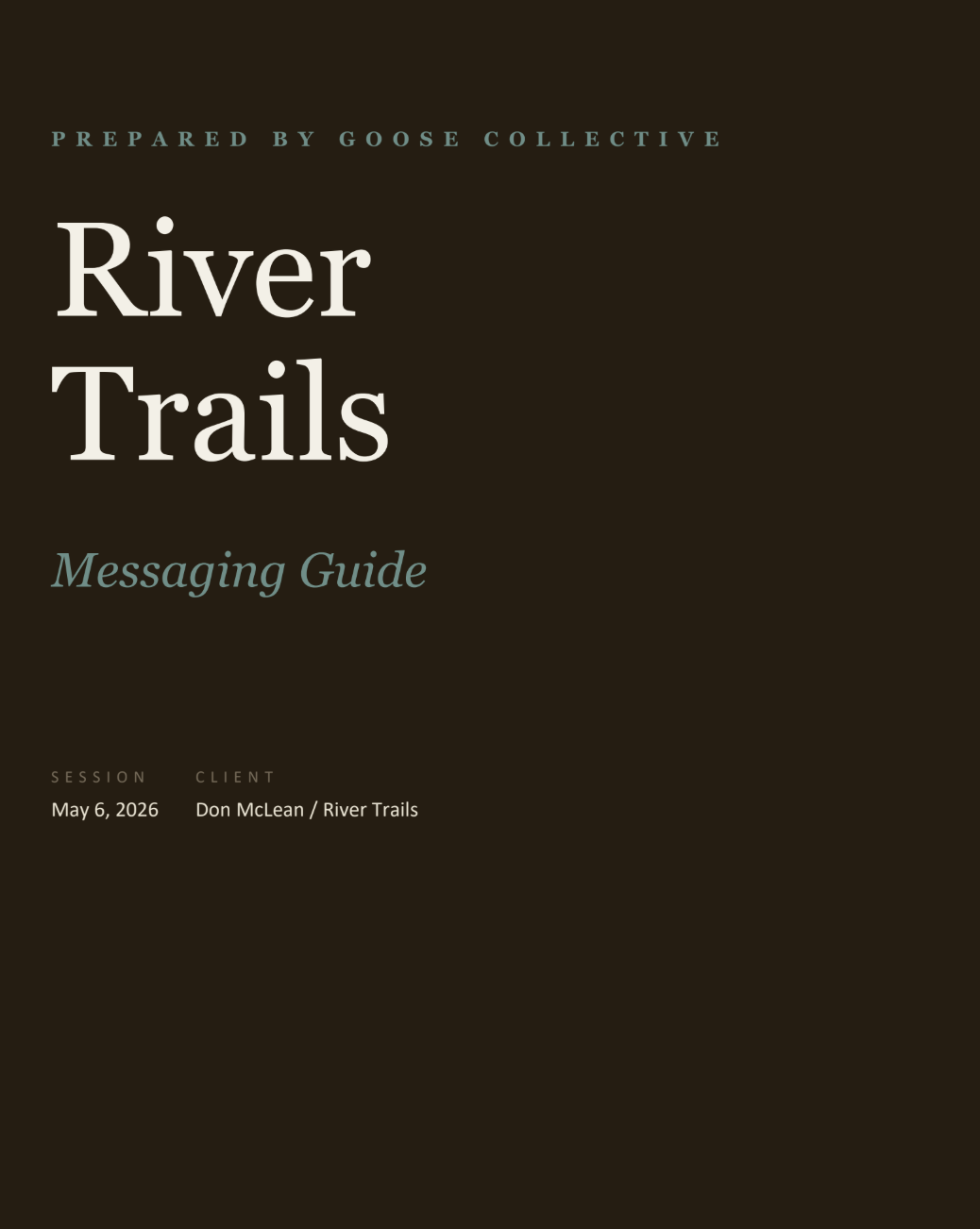
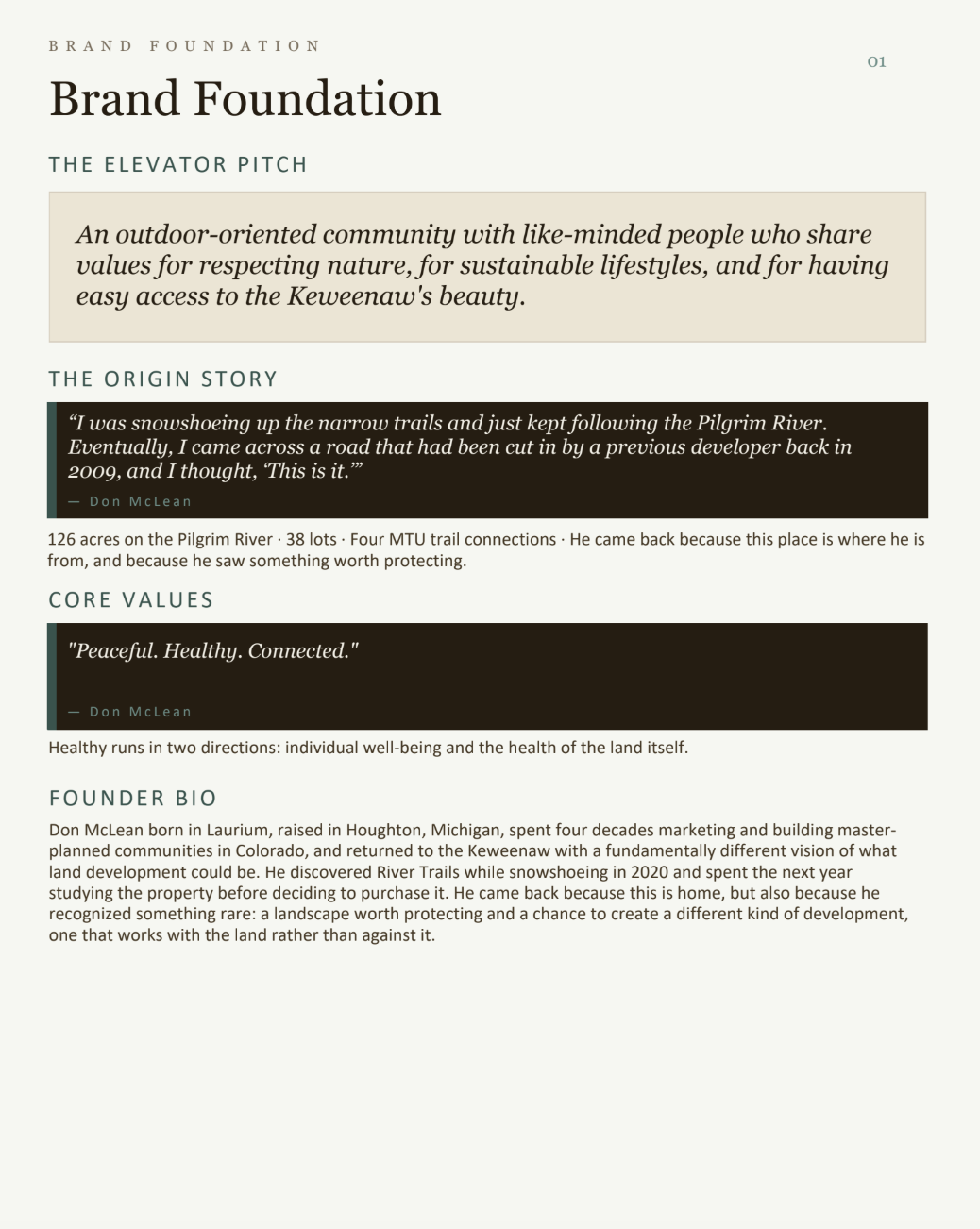
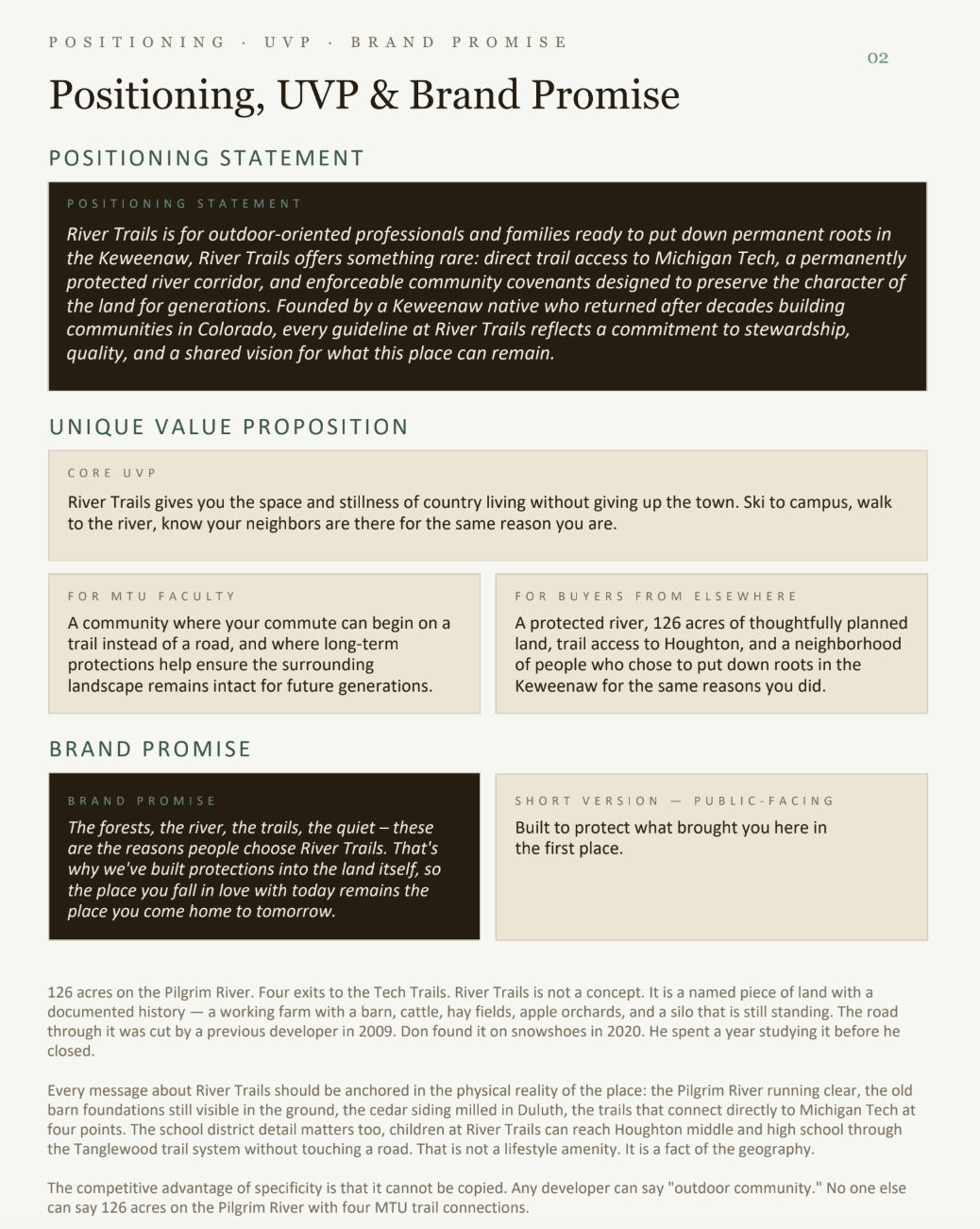
Before we wrote a single line of copy or picked a template, we built River Trails a messaging guide. This isn't a brand document full of adjectives and color swatches. It's a working tool. It defines four core pillars that anchor every piece of communication:
The Land Keeps Its Promises: The Pilgrim River, the trail access, the quiet. These aren't amenities that could be built elsewhere. They're fixed, permanent, real.
Community Is Structural, Not Aspirational: The covenants, the homesite sizes, the shared stewardship standards. The community is designed in, not hoped for.
Access to the Keweenaw Is the Product: Michigan Tech Trails, Nara Nature Park, world-class silent sports. The location isn't incidental. It's the point.
Built by Someone Who Came Back: Don McLean grew up in Houghton, built master-planned communities in Colorado, and returned deliberately. That arc is the most compelling thing about this project, and we made sure it leads.
The guide also includes vocabulary choices, before-and-after rewrites, and guidance on tone. It's what keeps the website, future blog posts, emails, and buyer conversations sounding like the same organization.
Here's the thing about doing this work upfront: everything that comes after it is easier. Future blog posts, social captions, email campaigns, signage at the property — none of it requires starting from scratch or guessing at the right voice. The messaging guide is the answer key. It means Don, his team, and anyone else who communicates on behalf of River Trails is always working from the same foundation. That kind of consistency is what makes a brand feel real.
See a glimpse the River Trails messaging guide
Why Squarespace Was the Right Call
We could have built a custom CMS. We didn't, and here's why.
River Trails' main goal was SEO and visibility, and Squarespace is built for it. Squarespace handles a lot of technical SEO automatically: clean URL structures, mobile optimization, fast load times, SSL, sitemap generation. We layered in custom SEO titles and meta descriptions for every page so that when someone searches "homesites Houghton Michigan" or "land for sale Upper Peninsula," River Trails shows up with copy that matches what a real buyer is actually looking for.
It looks good without a lot of fight. The design templates are well-structured. We could focus our energy on the content, hierarchy, and photography rather than debugging layout quirks. The result is a site that feels elevated without being fussy.
And critically: Don can update it himself. The best website is one the client can maintain without calling an agency every time something changes. As lots sell, new residents arrive, and the community grows, River Trails can keep the site current without friction.
What We Actually Built
The River Trails site gives prospective buyers everything they need to move from curious to serious.
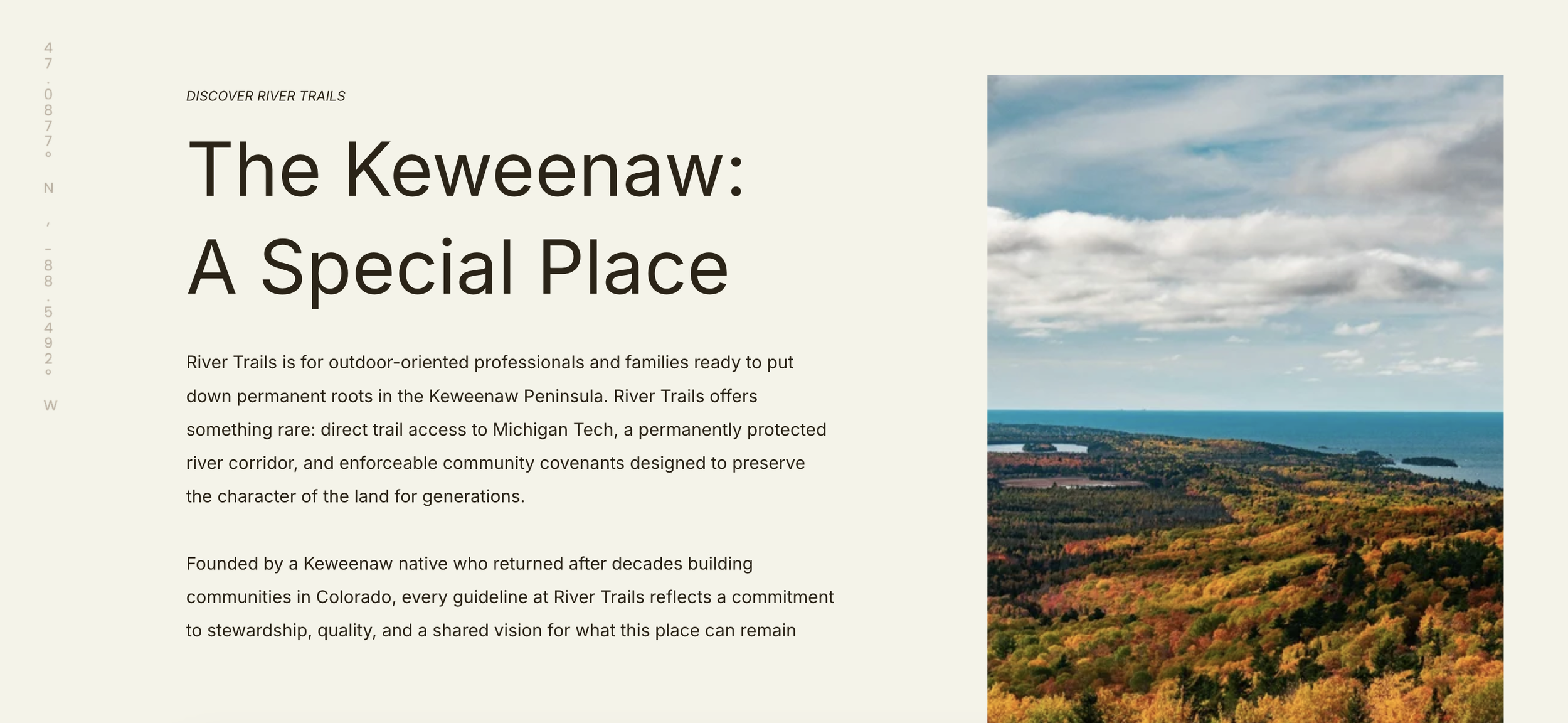
The homepage leads with the land: the river, the trails, the space, before explaining what any of it means or costs. That's intentional. People don't fall in love with specifications. They fall in love with a place.
From there, the site moves through the community vision, the covenants and standards (framed as values, not a list of things you can't do), the sustainable building philosophy, and the practical details of purchasing and building a homesite. We also built a downloadable step-by-step guide to the homesite buying and building process, so buyers who aren't ready to call can still leave with something useful.
Every page has a clear next step. Every section is written in plain, warm language. Not developer-speak, not marketing fluff. The goal was copy that sounds like a conversation with someone who knows the land and believes in it.
What Good SEO Actually Looks Like for a Project Like This
SEO for a niche land development project isn't about chasing high-volume keywords. It's about being findable by exactly the right people at the moment they're looking.
We thought about who's searching: someone who's been to the U.P. and wants to return. Someone who attended Michigan Tech and has always talked about moving back. Someone who cares about sustainable building and intentional community and doesn't want to land in a subdivision. Those people exist. They just need to find River Trails before they find something else.
So we wrote meta descriptions that speak directly to that person, not to an algorithm. We made sure every page title reflects actual search intent. We used language in the copy that real buyers use: "homesites," "silent sports," "Upper Peninsula," "Michigan Tech." Not the sanitized vocabulary of a generic real estate listing.
Good SEO and good writing are the same thing. If a page clearly says what it is and who it's for, search engines figure it out.
The Bigger Picture
River Trails is a long-game project. Lots sell one at a time. The community builds over years. What a website does for a project like this isn't generate instant volume. It's create a permanent, credible home for the story.
When a buyer hears about River Trails from a friend, or sees a mention in a local publication, or remembers a conversation with Don from two years ago, the website is where they go to see if it's real. It needs to feel like it is. It needs to be findable. And it needs to give them something to hold onto: a sense of what this community is before they're ready to make a call.
That's what we built. A site that earns trust, tells the truth, and makes the next step easy.
Curious what this could look like for your project? We’d would love to hear about it!
